
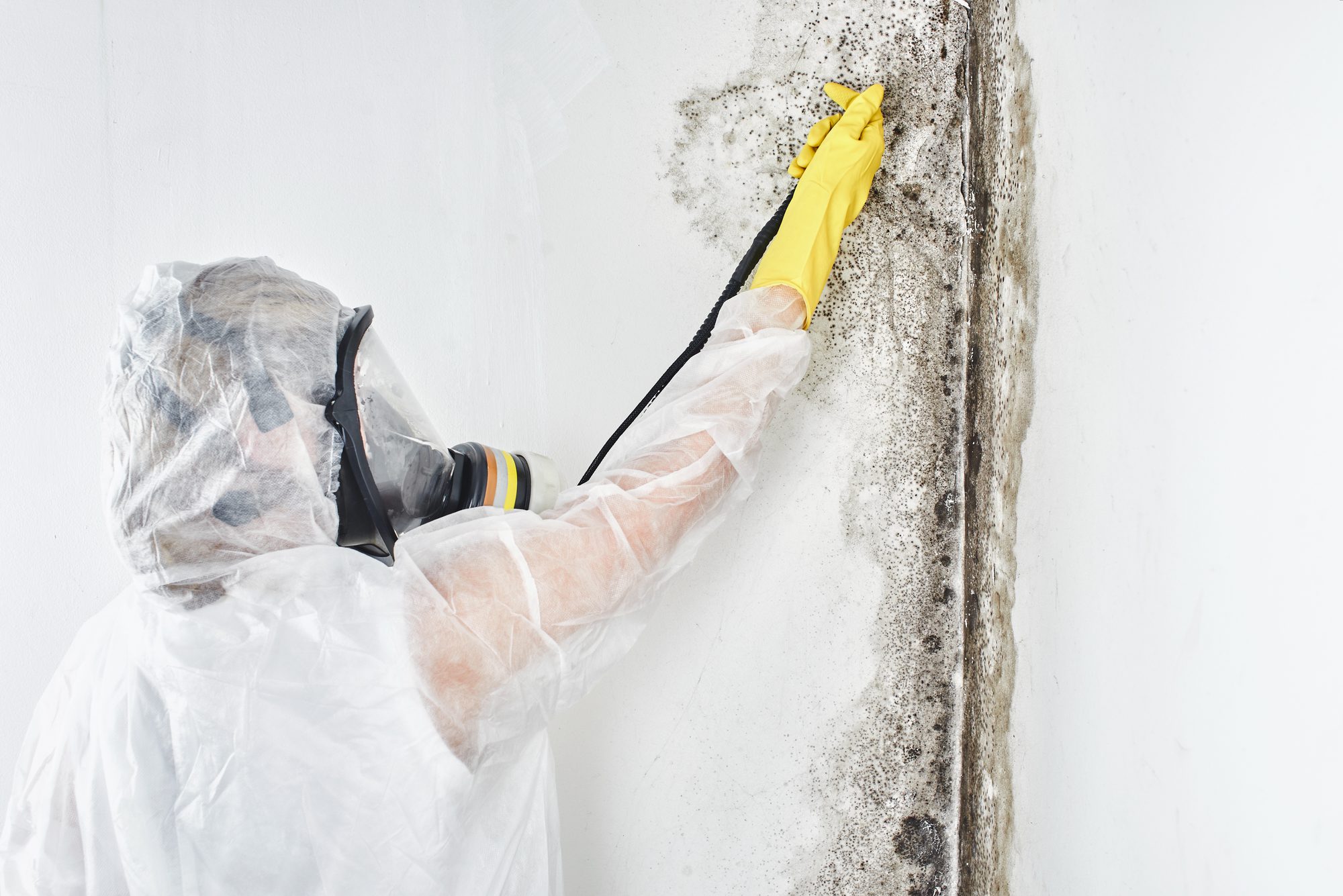
Mold remediation in Northern Virginia is not a cosmetic project — it is a health-and-structure problem that gets worse the longer it waits. At Flood Doctor, our IICRC-certified remediation teams inspect, contain, remove, and clearance-test mold growth across Fairfax, Arlington, Loudoun, and the wider DMV, and we do it the right way: we find the moisture source, eliminate it, and verify the air is clean before we ever take the containment down. If you can see mold or smell that musty, earthy odor, call (877) 497-0007 for a certified inspection.
Northern Virginia’s humid summers, freeze-thaw winters, and the region’s many finished basements and crawl spaces make local homes especially mold-prone. A small leak behind a vanity, a slow drip in a wall cavity, or a single un-dried water event can seed a colony that spreads through framing and HVAC ductwork within days. Below is exactly how professional mold remediation works, what it costs, what insurance covers, and why homeowners and property managers from McLean to Ashburn trust Flood Doctor to make it right the first time.
Why Mold Is a Genuine Health Hazard, Not Just an Eyesore
Mold is more than a stain on the drywall. Species like Stachybotrys chartarum (the so-called “black mold”), Aspergillus, and Penicillium release mycotoxins and allergens that can trigger respiratory problems, allergic reactions, headaches, sinus irritation, and — in sensitive individuals — more serious symptoms. Families often describe symptoms that improve when they leave the house and return when they come home. That pattern is a classic sign of an indoor mold problem.
What you can see is almost never the whole story. Mold thrives in dark, humid, undisturbed places: inside wall cavities, under flooring, above ceiling tiles, in HVAC plenums, and throughout crawl spaces. By the time visible growth appears on a finished surface, the hidden colony feeding it is usually far larger. That is why every Flood Doctor project begins with a real diagnostic inspection rather than a quick wipe-down.
Our IICRC Mold Remediation Process, Step by Step
We follow the IICRC S520 standard for professional mold remediation — the industry benchmark — on every job. Here is what that looks like in practice.
1. Comprehensive Inspection & Air Sampling
We use thermal imaging to reveal moisture patterns behind walls, calibrated moisture meters to quantify the extent of water intrusion, and air and surface sampling to identify mold species and spore concentrations. This assessment defines the scope of work and establishes the baseline we will measure against during clearance testing.
2. Engineered Containment
Containment is what separates professional remediation from a problem that gets dramatically worse. We build sealed barriers from 6-mil polyethylene sheeting and establish negative air pressure inside the work zone, so disturbed spores are captured rather than spread into clean parts of your home. For your family’s safety, the work area stays isolated from start to finish.
3. HEPA Filtration & Air Scrubbing
Hospital-grade HEPA air scrubbers run continuously inside containment, capturing spores as small as 0.3 microns. This filtration cleans the air during removal and continues afterward, which is critical for getting clearance results back within normal ranges.
4. Removal, HEPA Vacuuming & Antimicrobial Treatment
Inside containment, our technicians remove mold-contaminated porous materials, HEPA-vacuum every surface, and apply EPA-registered antimicrobial treatments to affected and adjacent areas. For structural elements that cannot be removed — framing, subfloor, sheathing — we use media blasting or sanding to strip surface mold, then encapsulate to inhibit future growth.
5. Source Moisture Elimination
This is the single most important step, and the one most cut-rate “mold sprayers” skip. Mold cannot grow without moisture. Whether the culprit is a hidden plumbing leak, poor attic ventilation, foundation seepage, a failed sump pump, or an undersized bathroom exhaust fan, we identify and correct the root cause. Skip this step and the mold always comes back — no matter how thorough the removal was.
6. Third-Party Clearance Testing
Before we remove containment, an independent environmental hygienist performs post-remediation air and surface sampling to verify that mold levels are back within normal ranges. You get documented, objective proof — not just our word — that the job is done.
Signs You Have a Mold Problem
- Visible growth — black, green, gray, or white patches on walls, ceilings, grout, or trim.
- A persistent musty odor — the earthy, damp smell of active mold, even when nothing is visible.
- Unexplained allergy or respiratory symptoms that improve when you leave the house.
- Recent water damage that was never professionally dried within 24–48 hours.
- Chronic condensation on windows, walls, or cold-water pipes.
- Peeling paint, bubbling wallpaper, or warped trim — signs of moisture behind the surface.
Can You Remove Mold Yourself?
For very small spots, careful cleaning can work. But the EPA recommends professional remediation for any contamination exceeding roughly 10 square feet. The reasons are practical: household bleach does not kill mold on porous materials — it only bleaches the surface color while the roots stay alive beneath. DIY scrubbing also disturbs spores and broadcasts them through the rest of the house. Professional containment, HEPA filtration, and proper removal protocols are what actually solve the problem instead of relocating it.
Does Insurance Cover Mold Remediation?
It depends on the cause. Mold that results from a covered, sudden water-damage event — like a burst supply line — is usually covered, though many policies cap mold-specific coverage at $5,000 to $10,000. Mold from long-term neglect, deferred maintenance, or chronic humidity is typically excluded. The key is documentation: we establish and record the connection between the water event and the mold growth, which is exactly what carriers need to approve a claim. With 8,000+ claims processed and a 98% approval rate, our team handles that paperwork and bills your carrier directly. Start your claim at our claims page or read more about water damage insurance claim help.
Why Northern Virginia Trusts Flood Doctor for Mold Remediation
We are a licensed Virginia Class A contractor (DPOR #2705155505), licensed in Washington, DC (#420222000069) and Maryland (MHIC #139079), with IICRC-certified technicians on every crew. We have completed thousands of remediation projects across the DMV, hold a 4.9-star average rating, and back our work with third-party clearance testing. Because mold so often follows water damage, we are also the team that can fix the underlying problem — from water extraction and structural drying to basement flooding repair — under one roof.
We serve homeowners and businesses throughout Northern Virginia, including Fairfax, Arlington, McLean, and Ashburn. Whether it is attic mold from poor ventilation, basement mold after a flood, or hidden growth behind a bathroom wall, our team contains it, removes it, eliminates the moisture source, and proves the air is clean before we leave.
Get a Certified Mold Inspection Today
If you suspect mold, the worst thing you can do is wait — it only spreads. Call Flood Doctor at (877) 497-0007 for a professional mold inspection in Northern Virginia, or request service online. We are based at 8466D Tyco Rd, Vienna, VA 22182, and we respond 24/7.
Mold remediation by City
Each city below has a dedicated local team and a 60-minute response target. Pick your city for local detail on housing stock, neighborhoods, and the risks we see there most:
- Mold remediation in Ashburn
- Mold remediation in Great Falls
- Mold remediation in Lorton
- Mold remediation in McLean
Not listed? We cover all of Northern Virginia, Washington DC, and Maryland — see the full service area or call (877) 497-0007.