
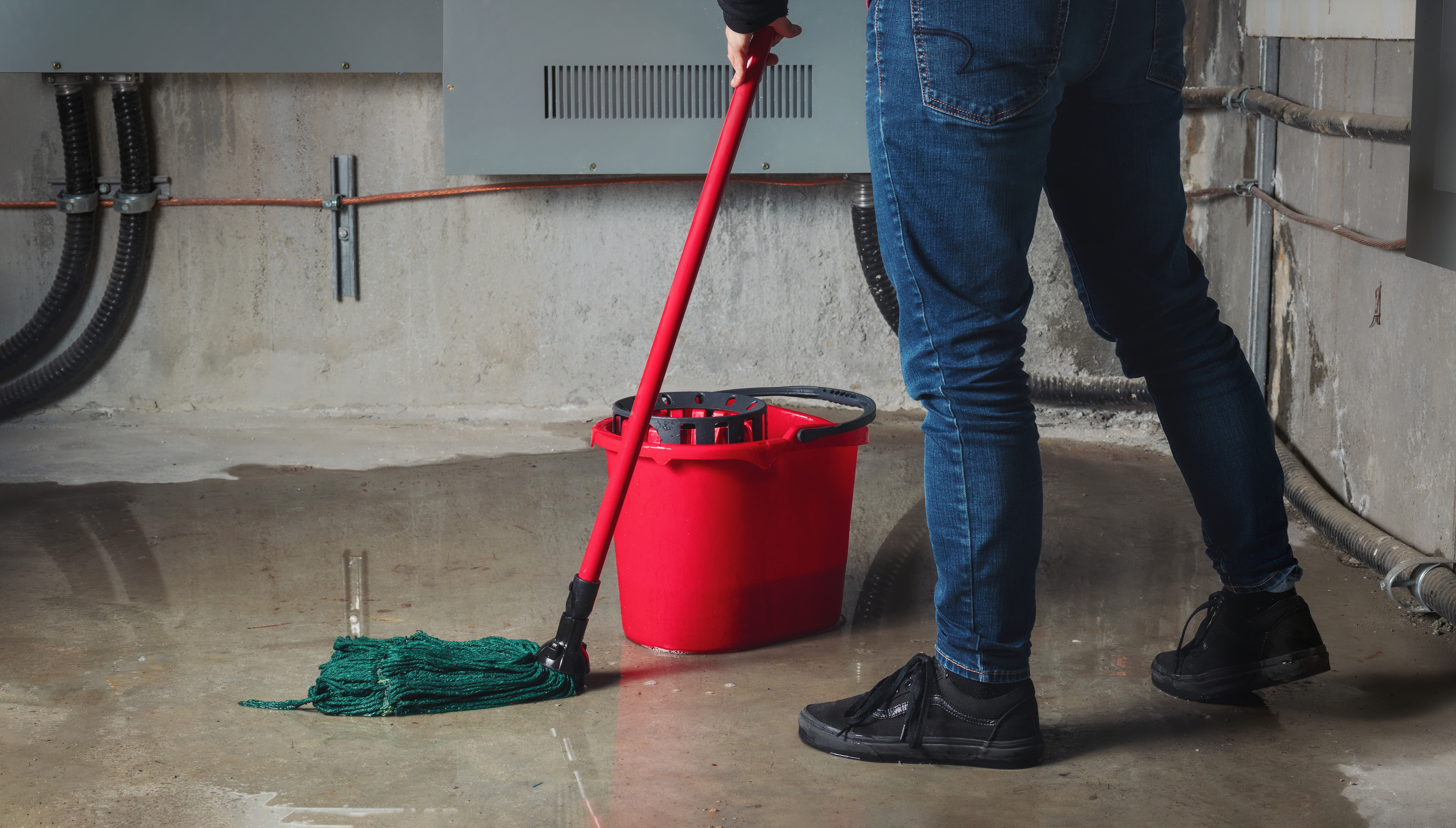
Flood damage cleanup in Northern Virginia is one of the most demanding jobs in restoration — and one of the most time-sensitive. Floodwater is rarely clean. It carries mud, silt, sewage, and contaminants, and it is classified under IICRC standards as Category 3 black water. At Flood Doctor, our certified, hazmat-trained crews respond across Fairfax, Arlington, Loudoun, and the wider DMV to safely extract floodwater, decontaminate your property, dry the structure, and restore it to pre-loss condition. If your home or business has flooded, call (877) 497-0007 immediately.
Northern Virginia sees flooding from many directions: flash floods after heavy summer storms, creek and Potomac tributary overflow, storm-drain backups in older neighborhoods, and groundwater seepage into the region’s many finished basements. Whatever the source, the first 24 to 48 hours determine how much can be saved — and floodwater’s contamination makes professional cleanup non-negotiable.
Why Floodwater Is Different from a Clean Water Leak
A burst supply line releases clean water. A flood does not. Floodwater is contaminated with bacteria, sewage, agricultural runoff, fuel, and chemicals, and it must be treated as a biohazard. That changes everything about the cleanup: our crews wear full personal protective equipment, porous materials that absorbed floodwater are removed rather than dried, and every surface is decontaminated with EPA-registered antimicrobials. This is never a DIY situation.
Our Flood Damage Cleanup Process
We follow IICRC S500 protocols for contaminated water, adapted for the realities of flood loss.
1. Safety Assessment & Source Control
Before anyone enters, we assess electrical and structural hazards. Floodwater plus electricity is deadly, so we de-energize affected areas and confirm the structure is safe to work in.
2. Rapid Water Extraction
Truck-mounted and portable extractors remove floodwater fast — tens of thousands of gallons per day when needed. Speed here directly limits how far moisture migrates into the structure.
3. Debris & Sediment Removal
Floods leave behind mud, silt, and debris. We remove it all and clean every affected surface down to a sound substrate before drying begins.
4. Controlled Demolition of Unsalvageable Materials
Saturated, contaminated porous materials — drywall, carpet padding, insulation — are removed and disposed of per EPA and local health regulations. This controlled removal prevents secondary damage and opens the structure for thorough drying.
5. Decontamination & Antimicrobial Treatment
Every salvageable surface is scrubbed and treated with hospital-grade, EPA-registered biocides to eliminate bacteria and pathogens. HEPA air scrubbers clean the air during the process.
6. Structural Drying & Verification
Commercial dehumidifiers and air movers dry the structure to verified dry standard, with daily moisture readings and thermal imaging confirming hidden areas are dry. See our structural drying service for the full science.
The Mold Clock Starts Immediately
In Northern Virginia’s warm, humid climate, mold can begin growing within 24 hours of a flood. The combination of contaminated water, saturated organic materials, and humidity is ideal for rapid colonization. Fast extraction, removal of unsalvageable materials, antimicrobial treatment, and complete drying are what stop mold before it starts. When growth has already begun, our mold remediation teams handle containment and removal.
What Can Be Saved After a Flood
More than people expect — if cleanup starts fast. Hard-surface furniture, many electronics, and some documents can often be restored. Porous materials that absorbed contaminated floodwater — mattresses, carpet padding, upholstered furniture — typically must be discarded for health reasons. We assess every item individually and document what we remove for your insurance claim.
Does Insurance Cover Flood Damage?
This is critical: standard homeowner insurance does not cover flood damage. Flood losses require a separate flood policy, usually through the National Flood Insurance Program (NFIP) or a private carrier. Water that enters from a burst pipe is covered by your homeowner policy; water that rises from outside the home is a flood and needs flood coverage. We work with both NFIP and private flood policies, document everything thoroughly, and bill directly. Start at our claims page or read more about insurance claim help.
Why Northern Virginia Trusts Flood Doctor
We are a licensed Virginia Class A contractor (DPOR #2705155505), licensed in Washington, DC and Maryland, with IICRC-certified, hazmat-trained technicians. We serve homeowners and businesses throughout the region, including Fairfax, Arlington, McLean, and Ashburn. From flooded basements to first-floor inundation, we extract, decontaminate, dry, and rebuild — all under one roof.
Get Flood Cleanup Now
Floodwater is contaminated and the mold clock is already running. Call Flood Doctor at (877) 497-0007 for 24/7 flood damage cleanup in Northern Virginia, or request service online. We are based at 8466D Tyco Rd, Vienna, VA 22182, and respond fast across Northern Virginia, DC, and Maryland.